
Web Application Development

How to Choose a Web Application Development Company

Learn how to evaluate web application development companies by technical fit, ownership, engineering practices, AI use, and handover terms.

Obaid Tariq

Obaid Tariq

6 min read
How to Choose a Web Application Development Company

Decide What You Are Actually Buying

A marketing site, customer portal, and multi-tenant web application are different purchases. Comparing them primarily on hourly rate can make very different web application development companies look equivalent.

Define the business outcome before building the feature list. Separate what must ship now from what can wait, and make sure the web development proposal clearly states what is outside the project scope.

  • Describe the business outcome in one sentence.
  • Separate must-have functionality from later improvements.
  • Ask each web development company to identify what is explicitly out of scope.
  • Compare development proposals using the same requirements.

Do Not Hire a Company to Validate an Unproven Idea

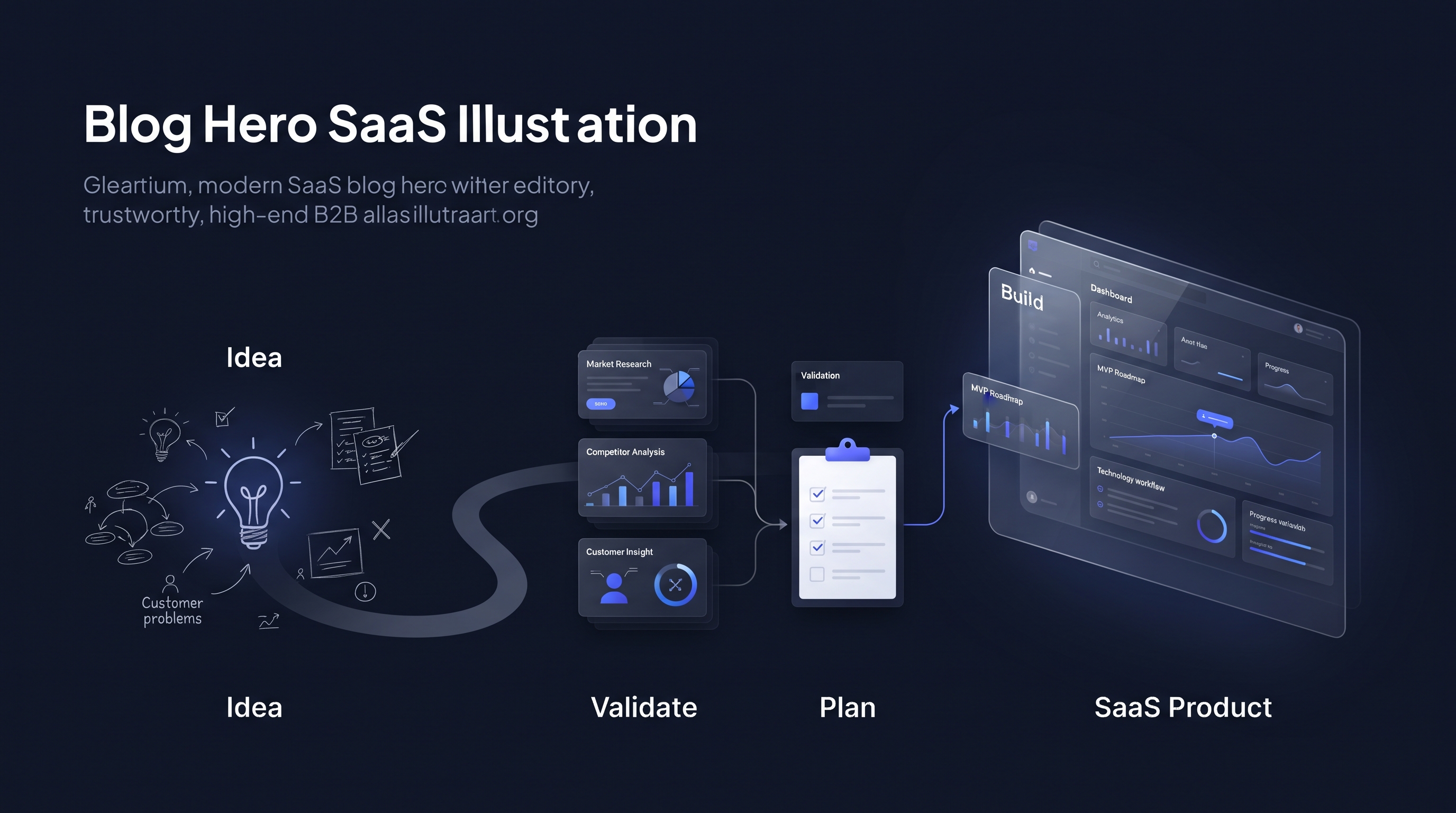
If you are still testing whether customers want the product, a full web application development engagement may be the wrong first step. A smaller build, concierge version, or narrow prototype can help you learn before committing to a larger implementation.

The development company becomes more valuable when you understand the job the software needs to do, who will use it, and which systems it needs to connect with. Product validation should reduce uncertainty before significant engineering effort begins.

  • Define the problem before defining the solution.
  • Identify the users who will interact with the product.
  • Understand the systems and integrations the product will require.
  • Validate the workflow before committing to a large web application build.

Evaluate the Team, Not the Sales Deck

A polished presentation is not enough to determine whether a company can build your product. The strongest evaluation focuses on the people doing the work and their understanding of your technical problem.

Look for evidence that the team can explain relevant projects, challenge assumptions, and identify trade-offs. You want a web development team that can tell you what it would build, what it would avoid, and why.

  • Ask for a project that matches your technical problem, not just your industry.
  • Meet the developers who will actually work on the product.
  • Ask who remains responsible after kickoff.
  • Ask what happens if the technical lead leaves.
  • Look for thoughtful questions about your users, funnel, edge cases, and requirements.

Look for Engineering Practices You Can Verify

Ask how the company manages code, environments, testing, deployments, and reviews. Repository access from the beginning is more useful than receiving a code archive at the end of a web application development project.

Engineering problems become especially expensive when the original vendor is the only team capable of changing the system. Several warning signs together should make you question whether you are building an asset or creating a dependency.

  • Ask for repository access from the first sprint.
  • Ask how code reviews are handled.
  • Ask whether the project has a staging environment.
  • Ask what the test suite covers.
  • Ask how frequently deployments happen.
  • Ask how changes move from development to production.
  • Watch for unclear ownership, limited testing, rare deployments, and processes that make the vendor difficult to replace.

Ask How They Use AI and Who Reviews the Work

Using AI is not enough to distinguish a development company in 2026. The important question is how AI-assisted software development fits into the engineering process and whether people remain accountable for architecture and critical interfaces.

A development team should be able to explain where AI is used, what requires human approval, and how another developer could understand the system without relying on the original AI conversations.

  • Ask where AI tools or agents are used.
  • Ask which architectural decisions require human review.
  • Ask who reviews generated code.
  • Ask how a new developer would learn the system.
  • Ask whether the team maintains a living architecture document.
  • Make sure speed from AI does not create a system that only the original team understands.

Put Ownership and Handover in the Contract

Web application ownership should not depend on a verbal promise made during a sales call. Your agreement should clearly establish what happens to the source code, designs, infrastructure, domains, and third-party accounts.

The goal is to be able to leave with the product and enough access and documentation to continue development with another team if necessary.

  • Confirm that source code transfers to you rather than remaining under a vendor-owned license.
  • Put domains, hosting, analytics, email, and third-party accounts in your name where appropriate.
  • Confirm that you can leave with the repository and infrastructure configuration.
  • Ask what documentation is included at handover.
  • Understand retainer terms, cancellation requirements, and automatic renewal.
  • Tie payments to accepted milestones rather than paying entirely before meaningful work is delivered.

Compare Proposals Using a Consistent Scorecard

A useful web application development proposal should make it possible to compare companies without translating different sales presentations into the same requirements. Look for the outcome, scope, technology decisions, team, delivery process, acceptance criteria, support, and handover terms.

For a product build, you can score each finalist from 1 to 5 against the areas below. Ownership and repository access should be treated as fundamental requirements rather than preferences.

  • Technical problem match — 20%
  • Discovery and scope clarity — 20%
  • Named team and continuity — 15%
  • Repository access, reviews, and deployment practice — 15%
  • IP, hosting, and handover terms — 15%
  • AI use with human architecture review — 10%
  • Post-launch support and exit terms — 5%

Questions to ask every finalist

  • Walk us through a project that went wrong. What did you change afterward?
  • Who owns the intellectual property?
  • When does the repository become ours?
  • Can we access the repository from the first sprint?
  • Which parts of this project would you generate with AI?
  • Who reviews the architecture and generated code?
  • What is not included in this price?
  • What happens during the first 30 days after launch if something breaks?
  • Which requirement would you cut, and why?

Make the Decision From Both Sides

Good web application development companies evaluate clients too. A strong working relationship requires someone on the client side who owns decisions, understands what done means, and can give timely feedback.

You do not need a large requirements document. You need a clear outcome, one decision owner, access to the people doing the work, and enough time to evaluate the development company before signing.

  • Assign one owner for decisions on your side.
  • Define what successful delivery means.
  • Check references directly where possible.
  • Verify the company's contact details and live products.
  • Ask about the team's experience with the specific problem you need solved.
  • Choose the company that can explain the system and reduce your dependency on them over time.
Obaid Tariq

About the author

Obaid Tariq

Founder & Product Builder

I'm a product builder and tech enthusiast, focused on helping founders turn ideas into real products.

More blogs

View more

Get the latest insights

Practical ideas for building better products, delivered directly to your inbox.

Stay objective.

Receive actionable system architectures and empirical experiments straight to your inbox.

One email per post. No spam — unsubscribe anytime.