SaaS Guide

What Is SaaS? Software as a Service Explained

What is SaaS? Learn what Software as a Service means, how SaaS works, common SaaS examples, B2B SaaS, Micro-SaaS, and how to validate SaaS ideas before building.

Obaid Tariq

Obaid Tariq

7 min read
What Is SaaS? Software as a Service Explained

What Is SaaS?

SaaS stands for Software as a Service. It is a software delivery model where an application is hosted by a provider and made available to customers over the internet.

Instead of installing and managing the entire application and its infrastructure themselves, customers generally use the software as an ongoing service while the provider operates and maintains the underlying system.

In simple terms, SaaS means using software as a service rather than owning and managing the complete software environment yourself.

  • SaaS means Software as a Service.
  • Customers generally access SaaS products online.
  • The provider operates and maintains the application.
  • Updates, infrastructure, and other operational responsibilities are typically managed by the provider.
  • Pricing may use subscriptions, usage-based billing, tiers, or other commercial models.
What Is SaaS?

What Does SaaS Mean?

The SaaS definition is straightforward: Software as a Service is a model for delivering software where the provider hosts and maintains the application and customers access it as an ongoing service.

The term SaaS meaning is therefore closely connected to how software is delivered, operated, updated, and accessed. The customer typically focuses on using the product, while the provider manages much of the technical environment behind it.

SaaS can be used for many types of applications, from productivity and collaboration tools to accounting, customer relationship management, analytics, communication, and business operations.

  • SaaS: Software delivered as an ongoing service.
  • Access: Usually provided through the internet or a connected application.
  • Operations: The provider manages the application environment.
  • Updates: The provider generally manages product releases and maintenance.

How Does SaaS Work?

A SaaS product connects the customer-facing application with the systems required to operate it. When users sign in, create records, update information, or perform other actions, the application processes those requests through its underlying services, databases, and infrastructure.

The customer experience is usually focused on using the product, while the SaaS provider handles much of the technical operation behind it.

  • Application hosting
  • Database management
  • Software maintenance
  • Product updates
  • Infrastructure management
  • Security and monitoring
  • Backups and reliability processes
  • Customer support

This operating model allows customers to use software without having to manage every part of the underlying technical environment themselves.

How Does SaaS Work?

What Are Some Examples of SaaS?

SaaS products exist across many industries and business functions. A Software as a Service (SaaS) application is software that is hosted and operated by a provider and accessed by customers over the internet, typically through a web browser, mobile app, or API.

SaaS applications can help individuals and organizations communicate with teams, manage customers, analyze data, automate workflows, handle finances, organize projects, and perform specialized business tasks without requiring customers to manage the underlying software infrastructure themselves.

Common SaaS Categories

SaaS covers a wide range of software categories, including:

  • Productivity and collaboration software
  • Customer relationship management (CRM)
  • Accounting and financial software
  • Project and task management
  • Marketing automation and analytics
  • Customer support and help desk platforms
  • Communication and team collaboration tools
  • Workflow and business automation software
  • Human resources and recruiting software
  • Security, monitoring, and IT management platforms

Examples of SaaS Applications

Many widely used software products follow the SaaS model. Examples include:

  • Google Workspace for productivity, email, documents, and team collaboration
  • Salesforce for customer relationship management and sales operations
  • Slack for team communication and collaboration
  • Zoom for online meetings and video communication
  • Asana for project and task management
  • HubSpot for marketing, sales, and customer relationship management
  • QuickBooks Online for accounting and financial management
  • Zendesk for customer support and help desk operations
  • Canva for online graphic design and visual content creation
  • Zapier for connecting applications and automating repetitive workflows

These products serve different purposes, but they share the core SaaS model: the provider operates the software as an ongoing service, while customers access and use the application without having to maintain the underlying servers and application infrastructure themselves.

The important characteristic is therefore not the category of software, but how the software is delivered, hosted, maintained, updated, and provided to customers as an ongoing service.

SaaS vs Traditional Software

The main difference between SaaS and traditional software is how the software is delivered and operated. Traditional software may require customers to install, maintain, and manage more of the application environment themselves, while SaaS generally places more operational responsibility with the provider.

The exact setup varies by product. Factors such as customization, deployment requirements, infrastructure control, security requirements, and data management can affect which approach is appropriate for an organization.

  • Traditional software: Customers may install and manage the application themselves.
  • SaaS: Customers generally access an application operated by the provider.
  • Traditional software: Updates may require customer involvement.
  • SaaS: The provider generally manages product releases and maintenance.
  • Traditional software: Customers may have more direct control over deployment.
  • SaaS: The provider manages the underlying service environment.
SaaS vs Traditional Software

What Are SaaS Companies and SaaS Services?

SaaS companies build and operate software products that customers use as ongoing services. These companies can serve almost any industry or business function, from sales and finance to marketing, operations, customer support, education, analytics, and internal workflows.

The term SaaS services can also describe professional services connected to SaaS products, including implementation, integrations, migration, consulting, customization, development, design, and support.

  • CRM and sales software
  • Marketing and analytics platforms
  • Accounting and financial software
  • Human resources systems
  • Customer support platforms
  • Workflow and automation tools
  • Project management software
  • SaaS development and consulting
  • SaaS integrations and implementation
What Are SaaS Companies and SaaS Services?

What Is B2B SaaS?

B2B SaaS means business-to-business Software as a Service. These products are designed primarily for businesses and organizations rather than individual consumers.

A B2B SaaS product often focuses on a specific business workflow or operational problem. The product may help a company reduce repetitive work, organize information, automate processes, improve collaboration, or manage an important business function.

  • Customer relationship management
  • Sales automation
  • Accounting and finance
  • Inventory management
  • Business analytics
  • Customer support
  • Human resources
  • Workflow automation
  • Cybersecurity
  • Project management
What Is B2B SaaS?

What Is Micro-SaaS?

Micro-SaaS is a small-scale SaaS business focused on a narrow customer group, workflow, market, or problem. The concept is useful for founders who want to start with a focused product instead of building a broad software platform from the beginning.

A Micro-SaaS idea can start with a recurring problem that affects a specific audience. The goal is to understand the problem, create a focused solution, and validate whether customers receive enough value from it.

  • Focus on a specific audience.
  • Identify a recurring problem.
  • Build around one core workflow.
  • Keep the initial product focused.
  • Understand the existing alternatives.
  • Validate demand before expanding the product.
What Is Micro-SaaS?

How to Find SaaS Ideas

A useful SaaS idea usually starts with a problem rather than a list of features. Founders can look for repetitive workflows, manual processes, customer frustrations, and tasks that people repeatedly manage using spreadsheets, documents, email, or multiple disconnected tools.

Online communities, customer discussions, product reviews, forums, and freelance marketplaces can reveal problems worth investigating. Searches around SaaS ideas Reddit, Micro-SaaS Reddit, industry communities, and customer complaints can provide useful research signals.

  • Look for repetitive manual tasks.
  • Study how people solve the problem today.
  • Review complaints about existing solutions.
  • Research relevant communities and discussions.
  • Look for recurring problems in freelance projects.
  • Compare existing competitors and alternatives.
  • Separate evidence of a problem from assumptions about demand.
How to Find SaaS Ideas

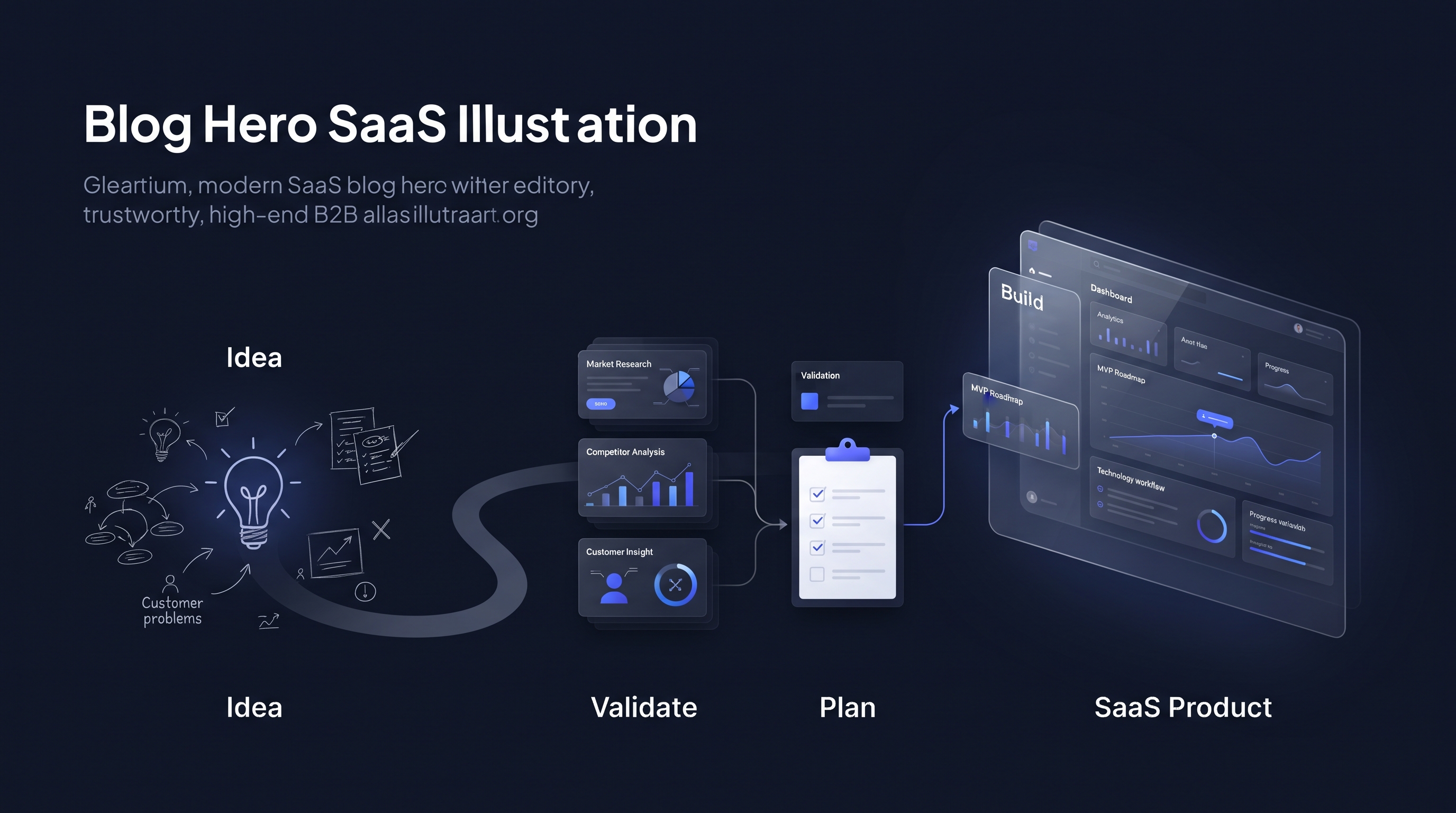
How to Validate a SaaS Idea Before Building

Finding a promising SaaS idea is only the beginning. Before committing significant development time and budget, founders should investigate the customer, problem, existing alternatives, and evidence that the problem matters.

Validating a SaaS idea before building helps turn an initial concept into a clearer product decision. The objective is to learn what customers actually need before building a large product around untested assumptions.

  • Define the target customer.
  • Describe the problem clearly.
  • Research existing competitors and alternatives.
  • Talk with potential users.
  • Identify how the problem is handled today.
  • Test important assumptions.
  • Build a focused MVP.
  • Measure real usage and customer feedback.
  • Use the findings to decide what to build next.

For a practical process, see our guide on how to validate a SaaS idea in 7 days without overbuilding.

How to Validate a SaaS Idea Before Building
Obaid Tariq

About the author

Obaid Tariq

Obaid Tariq

I help founders turn ideas into real products by connecting product strategy, validation, technology, and execution. I focus on understanding the problem first and using evidence to guide what gets built.

More blogs

View more

Get the latest insights

Practical ideas for building better products, delivered directly to your inbox.

Stay objective.

Receive actionable system architectures and empirical experiments straight to your inbox.

One email per post. No spam — unsubscribe anytime.