
SaaS Engineering & Cost Analysis

SaaS Development Cost: Budget Drivers, Benchmarks, and Total Cost of Ownership

A comprehensive financial and engineering breakdown of SaaS development costs: from multi-tenant database modeling and Stripe billing to annual cloud hosting, maintenance, and vendor selection.

Obaid Tariq

Obaid Tariq

7 min read
SaaS Development Cost and Budget Drivers Breakdown
Table of Contents (7 sections)▼

The Cost Spectrum: Why Quotes Range from $15,000 to $150,000+

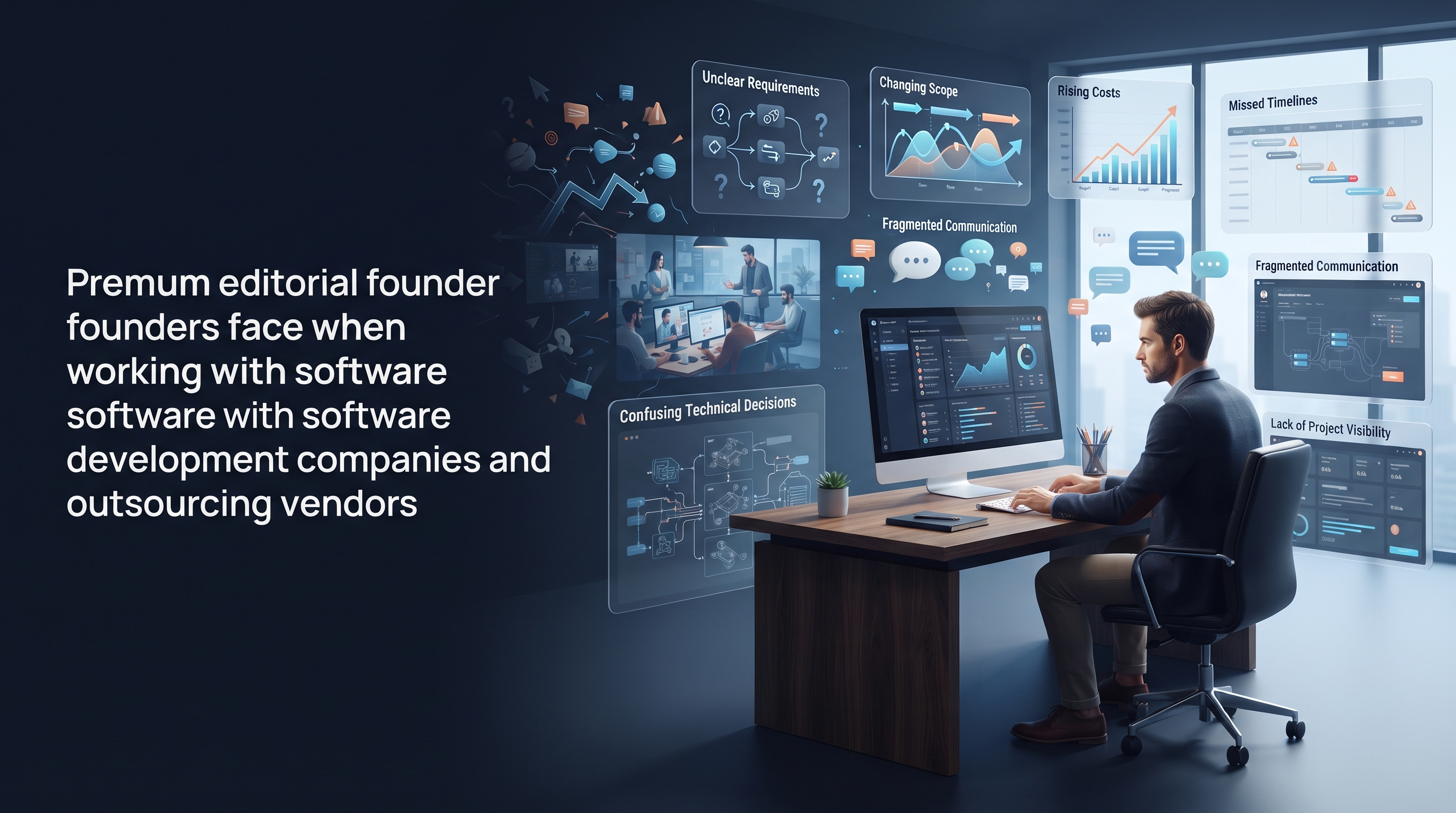
When founders submit a software specification to multiple development agencies, the resulting bids frequently cause bewilderment. One offshore freelancer bids $12,000; a boutique development studio estimates $45,000; and an established enterprise agency quotes $180,000. All three claim to be building the same product.

The vast variance in SaaS development pricing is not arbitrary mark-up; it reflects fundamentally different assumptions about what is actually being delivered:

  • The $10k–$20k Tier (The Prototype / Template): Typically built by junior solo developers using low-code tools or pre-built open-source boilerplates. Critical enterprise requirements—such as strict database Row-Level Security, automated CI/CD pipelines, end-to-end integration tests, and structured error logging—are completely omitted.
  • The $35k–$75k Tier (Production-Grade SaaS MVP): Delivered by experienced senior engineers or specialized boutique studios. Includes clean relational schema design, secure multi-tenancy, Stripe subscription webhooks, complete code test coverage, and documentation ready for scaling or investor technical due diligence.
  • The $100k+ Tier (Complex Multi-Role Platform): Involves custom compliance frameworks (HIPAA, SOC 2, GDPR), enterprise Single Sign-On (SAML/Okta), complex real-time collaboration engines, or custom AI/ML model orchestration pipelines.

Understanding where your project sits requires inspecting the specific architectural cost drivers behind the code.
Primary SaaS Budget Drivers: The Architecture Behind the Quote

Unlike standard marketing websites or brochure web apps, SaaS applications operate on a complex foundation of recurring state, financial workflows, and user isolation. The following four technical pillars represent 70% of initial engineering hours:

1. Multi-Tenant Database Architecture

A single-tenant app simply queries user rows. A multi-tenant SaaS must ensure that Company A can never view or mutate data belonging to Company B. Implementing Postgres Row-Level Security (RLS) policies across dozens of relational tables requires careful schema planning, tenant context injection in middleware, and index optimization to prevent queries from slowing down as tenant volume expands.

2. Authentication, RBAC, and Enterprise SSO

Consumer apps need a simple email/password login. B2B SaaS demands multi-user organizations, workspace invitations, and Role-Based Access Control (RBAC) distinguishing Admins, Editors, and Billing Managers. If selling to enterprise clients, SAML/SCIM Single Sign-On adds significant integration complexity.

3. Subscription Engine & Stripe Webhook State Machine

Accepting a one-time credit card charge takes a single afternoon. Building a resilient recurring subscription engine requires handling asynchronous webhooks for monthly recurring revenue (MRR), failed payment retries, seat proration, trial expirations, and downgrades without corrupting user access flags.

4. Background Jobs and Third-Party API Rate Limits

Heavy operations (e.g., CSV data imports, automated email sequences, PDF invoice generation, AI inference calls) cannot run on the main HTTP thread without triggering 30-second gateway timeouts. Architecting asynchronous worker queues (Redis / BullMQ / Inngest) with automated retry mechanics accounts for substantial backend development effort.

Hidden and Ongoing Operating Costs: Total Cost of Ownership (TCO)

Founders frequently expend 100% of their capital on initial code development, leaving zero runway for operational infrastructure. Software is not a static asset; it requires continuous cloud operations to remain functional and secure.

Expense CategoryInitial Build PhaseYear 1 Operating Range
Database & Cloud Hosting$0–$50 / mo (Free tiers)$100–$600 / mo (AWS, Supabase, Vercel)
Observability & Error Tracking$0 (Sentry free tier)$50–$250 / mo (Sentry, Datadog)
Transactional Email & SMS$0 (Resend / SendGrid free)$30–$150 / mo based on user volume
Security & Dependency PatchingIncluded in build15%–20% of original build cost annually
Payment Gateway Fees$02.9% + $0.30 per transaction (Stripe)

As detailed in our guide to affordable software development, planning for Total Cost of Ownership prevents the common crisis where a startup runs out of budget immediately upon deploying to production.

Engagement Models: Freelancers vs. In-House Engineers vs. Specialized Dev Companies

The team structure you select directly governs your capital efficiency and delivery risk:

  • Solo Freelancers: Lowest nominal cost ($35–$80/hr). High risk of single-point-of-failure delays, uneven QA standards, and potential project abandonment if they receive full-time employment offers.
  • Hiring Full-Time In-House Engineers: Highest cost. In the US/UK, hiring two senior engineers and a designer incurs $350k+ annually in base salaries, recruiter fees, benefits, and equity, plus 2–3 months of recruitment lag before the first line of code is written.
  • Specialized Software Development Company: Balanced cost and predictability ($50–$120/hr effective rate). Provides an integrated team (lead architect, full-stack engineers, QA, DevOps) that can assemble and deploy an MVP within an 8-to-12-week window without ongoing payroll liabilities.

If you choose to hire an external partner, review our detailed criteria for hiring a software development company to conduct rigorous due diligence on IP ownership and code quality.

Fixed-Price vs. Time & Materials: Understanding Financial Risk

How an agency bills you often impacts project outcomes more than their hourly rate:

The Illusion of Fixed-Price Predictability

Founders naturally gravitate toward fixed-price contracts because they appear to guarantee financial safety. However, fixed-price contracts inherently pit client and agency against one another. If unexpected technical hurdles arise, the agency is financially incentivized to cut corners on code quality and automated testing to protect their margin. Furthermore, every minor product adjustment turns into a contentious "Change Request" invoice.

Agile Time & Materials with Milestone Guardrails

A superior model for SaaS builds is agile Time & Materials capped by strict two-week sprint milestones. The agency provides transparent hour tracking and demonstrable staging builds every 14 days. If user testing reveals that a planned feature is unnecessary, the founder can pivot the upcoming sprint backlog immediately without contract renegotiation.

Practical Strategies to Cut Initial Build Costs by 40% Without Sacrificing Code Quality

You do not need to cut corners on security or software architecture to build an affordable product. Apply these high-leverage scoping principles:

  1. Leverage Managed Backend Services: Using Supabase or Firebase eliminates hundreds of hours writing custom auth middleware, database migration infrastructure, and WebSocket listeners.
  2. Utilize Component Design Systems: Avoid designing custom button states, dropdowns, and modal dialogs from scratch. Implementing battle-tested component primitives (e.g., Tailwind CSS, shadcn/ui) saves dozens of frontend design hours.
  3. Delay Custom Multi-Tier Billing Logic: For initial beta users, send manual Stripe invoices or basic Stripe Checkout links. Build complex seat-based proration engines only after paying customers request them.
  4. Execute Lean MVP Prioritization: Follow the principles outlined in our SaaS MVP planning framework to strip away non-essential features before writing code.

If you are ready to evaluate engineering execution, explore our flagship software development company services to review our transparent delivery framework.

Frequently Asked Questions About SaaS Development Costs

How much does a production-ready B2B SaaS MVP cost to build?

A focused, production-grade B2B SaaS MVP typically ranges from $25,000 to $65,000 depending on workflow complexity, third-party integrations, and whether external data APIs require custom ingestion pipelines.

Why is SaaS more expensive than building a standard custom web app?

SaaS applications require complex multi-tenant data isolation, automated subscription billing, user role permissions, background worker queues, and high-availability cloud infrastructure—components rarely needed in standard web applications.

What ongoing maintenance budget should founders anticipate annually?

Plan for 15% to 25% of initial build costs per year to cover cloud hosting, security patches, database dependency updates, third-party API version changes, and continuous bug fixes.

Does using AI coding tools reduce development agency costs?

AI coding assistants accelerate routine boilerplate writing by 20%–30%, but architecture, database security modeling, third-party webhook reliability, and QA testing still require experienced human engineering leadership.

Need a Transparent, Engineering-Led Quote for Your SaaS?

Talk to our senior engineering team to scope your feature backlog, select the right architecture, and receive an itemized development roadmap.

Get a Technical Scope Review

Sources

Obaid Tariq

Written by

Obaid Tariq

Founder & Lead Engineer at AI Dev Planner

Expertise:SaaS development, software architecture, AI engineering, product development

Published: Updated:

More blogs

View more

Get the latest insights

Practical ideas for building better products, delivered directly to your inbox.

Proven Implementations

Inspect related architectures, engineering metrics, and implemented systems backing these capabilities.

View Full Portfolio
Financial trading system architecture diagram showing Kafka event pipeline and microservices
Verified Architecture
FinTech & Capital Markets
2024 • Custom Software Development

Migrating Core Infrastructure for a Global Financial Services Firm: Cloud-Native Microservices Architecture

Tier-1 Proprietary Trading Firm & Asset Management Provider (UK/North America)
London, UK & New York, USA
Business Problem

Aging on-premise monolith suffered severe database lock contention and multi-second batch reconciliation drift during peak volatility, risking trader execution SLAs and regulatory audit compliance.

Executed Deliverables

Complete redesign and deployment of the transactional backbone, asynchronous event streaming pipeline, and real-time execution cockpit.

Core Technologies
AWS (ECS/Fargate)Apache Kafka (Amazon MSK)Next.jsNode.js+3
Verifiable Outcomes
  • Zero Downtime Phased Strangler Cutover
  • Sub-20ms Real-Time WebSocket Feeds
  • 100% Immutable Kafka Audit Event Log
Healthcare worker using a secure digital patient portal on a tablet device.
Verified Architecture
Healthcare & Clinical Operations
2023 • Customer Portal Development

Clinical Onboarding & Patient Portal: Secure Digital EHR Integration Architecture

Outpatient Medical Network operating 14 regional specialty clinics (USA)
United States (Multi-facility Network)
Business Problem

Manual front-desk intake generated long patient waiting times, high transcription error rates, and delayed insurance claim verifications across 14 clinic locations.

Executed Deliverables

Design, build, and deploy a responsive mobile-friendly pre-registration web app, a clinical verification dashboard, and HL7/FHIR integration adapters.

Core Technologies
ReactNode.jsGoogle Cloud KMSGoogle Cloud Vision OCR+2
Verifiable Outcomes
  • HIPAA Aligned Encrypted Cloud Data Silos
  • 100% Clinician Verified Mandatory Human-in-the-Loop
  • 3 Clinics Pilot Zero Data Leakage Incidents

Stay objective.

Receive actionable system architectures and empirical experiments straight to your inbox.

One email per post. No spam — unsubscribe anytime.